
NEWSByZack Eaton
TUE DEC 2Brooklyn Brewery Supports: Mika KauffmanThis year, we’re proud to launch Brooklyn Brewery Supports, a new initiative created in partnership with actor, model, LGBTQ+ activist, and The Stonewall Inn Gives Back Initiative board member Angelica Christina. Instead of a Pride campaign, we’ve taken direct action by sending $1,000 each to twenty-five trans, non-binary, and two-spirit New Yorkers in need, while uplifting their stories throughout 2025. At a time when these communities are facing escalating discrimination, anti-trans legislation, and even violence across the country, we believe the most impactful way to stand in solidarity is by sharing resources and amplifying voices that deserve to be heard.
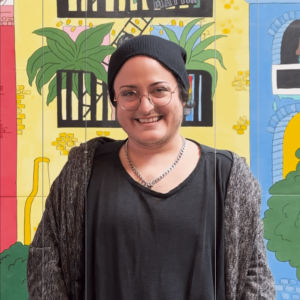
Mika Kauffman is a storyteller who uses art to imagine safer, more expansive futures for trans creatives. As a musical theater writer, Mika founded the Trans Entertainment Guild, which for the past five years has been identifying what’s missing, what’s needed, and what truly allows trans artists to show up safely and fully so that they can focus on their craft and thrive. In our chat with Mika, they discuss what showing up for trans people actually looks like and what they would say to their younger self.
Brooklyn Brewery: Tell us about your work as a writer and director.
Mika Kauffman: Most of what I do as a musical theater writer is explore horror, especially through a trauma informed lens. For example, my musical called “Maxa: The Baddest Woman in the World” is all about this scream queen from the 1930s in France, and nobody knows who she is. But her name is Paula Maxa and she was best known for her scream, and she suffered some of the worst atrocities that you can imagine. We started writing it in like 2019/2018, but being able to look through that lens has been so healing.
A lot of my work does really explore sort of that healing journey that we take, not necessarily providing an answer for what people need, but at least the spark of how we can be better.
The music video, “Strange Power” is from Maxa. I tried submitting it to festivals over the past few years. But again, I’m so deeply involved in theater, I’m not as much involved in the film world.
I submitted it to this festival and it was accepted. So, to be a part of something that has been going on for 28 years in San Francisco, the San Francisco Transgender Film Festival is one of the coolest things in the world. I’m just so excited to meet so many trans people in the film scene.
BB: Why is transness in the entertainment industry so important to you?
M: I remember sitting down at a diner with my partner Nat, and just talking with them and being like, I have an idea for an organization of some kind that I really want to not only uplift trans people, but also protect trans people that are in the entertainment industry.
We came up with the Trans Entertainment Guild, and for the past five years, we have been on the ground interviewing trans artists in their field. That includes directors, actors, comedians like this broad variety of, just artistic practitioners and learning what they were missing, learning what they need in terms of support in a room. And then, also how they were being affected in the room as well.
What was really cool is that we ended up creating a rider that can attach to contracts for trans artists, especially if they’re traveling abroad. And we wanted to make sure that they were protected at the theater in whichever state that they may be in and just be treated like a human being. The ultimate goal is not only do we want to uplift trans artists, we want to help improve their lives as well, especially during a time in which trans people have literally been called by the government to be eradicated.
Community has always been a driving force in every single thing that I do. I firmly believe in creating a space for trans people to thrive. I wanted to make sure that I could create a space and cultivate it with other people so that there’s equality, so that there’s accessibility, so that we can all concentrate on the work, with each other. Rather than having to hide ourselves, rather than assimilating and disappearing and really celebrating one another for who we are as individuals and together as a group.
BB: Why is it so important to support the trans community?
M: It is extremely important to support the trans community and not just as a broad statement of “support the trans community,” but support trans people. We’re such a small part of the population, and it has been so normalized to look at us as a conglomerate, when in actuality, we are all human beings who are extremely different from one another.
And the thing that I love about trans people is—it’s not a matter of bravery, it’s not a matter of courage, it is just existing. I did not know I was trans until I finally found the people who I saw existing as themselves.
It is very scary right now. Having to wake up every morning and resist the urge to open my phone and doomscroll through all of these horrifying anti-trans laws. Not only that, but, just thinking of black trans women who are the most affected by this—black trans men and non-binary people, whose intersection of identities puts them at greater risk. And we don’t even have the statistics on the number of deaths, or suicides, that happen because of this sort of, media blanketing of information.
It’s very sad and unfortunate to think of the amount of trans youth who are being targeted in a very hostile and horrifying way. I may not have known that I was trans until I was 28 years old; I’m now 34 and I can’t imagine my future now. And I just think of all of the younger trans people who are targeted who need that reminder that you do have a future and that you will get through this. I was able to get through it. I couldn’t have imagined it when I was a child because I had no idea who I was. And I think that trans kids are the most courageous human beings in the world because of that, and they need to be protected at all costs.
That’s part of the reason, too, that I’m writing my current musical, which is about a trans child. Because we need to see those stories. It is about a trans child in a haunted house—11-year-old Bugg who does not know he’s transgender. And, it’s the summer before middle school. And his uncle, who was this beloved drag queen, recently passed away. So, he is having to cope with his own grief while dealing with all of these feelings that he can’t quite articulate.
And it’s through his grieving that he is able to discover that he’s trans and he doesn’t face any bullying or cruelty for being trans at all. One of the greatest things that the author Kyle ever said to me when I asked him about that was, “oh, transphobia is just lazy. It is lazy.” And I’m like, “you know what? You’re right.”
BB: What are you doing to celebrate yourself?
M: Something that I’ve learned about myself, especially as a human who has had to constantly hustle over the years in order to survive, is actually taking the time to celebrate the accomplishments that I have achieved. Very often, we will get so hung up on, on just the survival aspect of everything and go, go, go. That it’s rare that I stop and just breathe.
Instead of being critical about the work that I’m doing, actually celebrating the work that I’m doing as well, and with the people that I love.
It’s wild because I think of my younger self; I had no idea the person that I would turn out to be, because I couldn’t imagine a future for myself. So that’s something that has really stuck with me recently, is celebrating every little moment that I have, because it feels like it’s borrowed time, but it’s also time that I earned because I worked to make sure that I could learn to love myself and that I could better myself and show up for the people who love me and accept that love in return.
BB: What would you say to a trans person who’s trying to hold it all together right now?
M: I mean, listen, I am a trans person that’s trying to hold my shit together, and it is hard. So, the thing that I would say is, let yourself feel it, but do not let it bring you down.
The internet is wild, but the internet also connects us. Reach out to community members. And keep going. It’s the hardest thing in the world to be trans, but it is also the most rewarding thing in the world. I am so proud of who I am, and I am so grateful that my younger self protected me and made sure that I made it through to be who I am today.
BB: How has this fund supported you?
M: I had found this program on social media, and I applied to it just thinking that I would not get anything in return, that I probably wouldn’t hear anything back. The idea of receiving money without having to give anything in return is mind-boggling.
Very often within the trans community, we see trans people who are constantly participating in mutual aid for each other. We are constantly passing these funds around in a never-ending circle and we are not seeing that sort of help outside of that circle, especially from cis people.
When I did receive this, I was extremely surprised because that’s just something that I don’t expect to happen. And this is something that is extremely important, especially when it comes to what are actionable ways that people can help.
When you see a post, for example, of a GoFundMe of someone who’s having top surgery, maybe instead of sharing their story, you could give $5. Maybe you could offer to run groceries to them. Maybe you could just check in and say, how is your heart today? Maybe you could offer a hug, a phone call, a ride home, something that can help a trans person just feel safe.
The thing that this fund provided for my wife and I was just immediate, momentary relief and the amount of relief that I felt, especially in just receiving that email—because, you know, living month to month in the red is a very difficult thing to do in New York. And having that sort of relief and being able to just take my wife on a date really means the world. That’s not something that we do because we can afford to.
Being able to make sure that we were using this money in a way that we could celebrate each other was very meaningful to us. As people who are constantly working, we have to remind ourselves that we also need to take the time for ourselves. So, being able to have that money and being able to just even go on a date meant the world.
BB: How is your heart today?
M: My heart’s really good right now. And I specifically love asking questions like that because it’s so normalized to just be like, “how are you? Good.” Everyone will just answer: good. I’ve made it a habit for myself recently to be honest about how I’m feeling. I would much rather be grounded and transparent with people that I am cultivating this community with. Instead of just, “how are you? Good.” I would much rather it be like, how is your heart? Something or others so that you know, it’s not just that blanket, “good,” because there’s always so much more underneath.
Share:Original Source Here